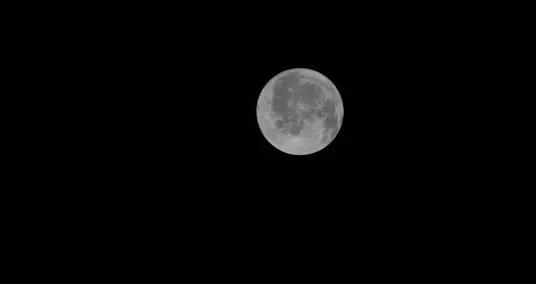
Sky-gazers worldwide may get the chance to see a celestial display this week as the annual Leonid meteor shower reaches its peak.
The Leonids are set to peak at 1 p.m. ET Monday, according to EarthSky. You may start glimpsing meteors at 11 p.m. Sunday local time, which is when the constellation Leo rises over the horizon. But it’s best to watch for them between 4 a.m. Monday and sunrise local time, said Robert Lunsford, fireball report coordinator for the American Meteor Society.
“Unlike a lot of (meteor) showers, the Leonids have a very sharp peak,” Lunsford said, adding there is only one good night for viewing.
The Leonids’ parent comet, 55P/Tempel-Tuttle, is to thank for this brief duration. The size of the comet’s debris trail is small, so Earth passes through it for a short amount of time.
The meteors you’ll see around 11 p.m. Sunday will be Earth grazers, Lunsford said, which means they’ll last longer than normal and will shoot across a large portion of the sky. “But you won’t see as many because a lot of the Leonid activity will be shooting downward below the horizon,” he added.
Under clear weather conditions, you can expect to see 10 to 15 meteors per hour.
Showers and storms
While a meteor shower is expected this year, the Leonids are known for occasionally producing tremendous meteor storms, with at least 1,000 meteors per hour.
The last Leonid meteor storm was in 2002. However, one of the most memorable storms occurred in 1966 when “we passed right through the center of one of the Leonid streams and rates were estimated at 40 meteors per second,” Lunsford said.
That storm had meteor activity so prevalent in the sky that meteors appeared to fall like rain.
High meteor activity coincides with when the comet 55P/Tempel-Tuttle reaches perihelion — its closest approach in orbit to the sun. It takes the comet 33 years to orbit the sun, so the larger Leonid meteor showers — and sometimes storms — tend to occur about every 33 years.
For a storm to happen, Earth has to pass through a dense part of the comet’s debris during perihelion, but sometimes our planet only skims the outskirts.
The next shower that will coincide with the comet’s orbital cycle will take place in 2033, but it is not expected to be a storm, Lunsford said. “We may see rates of around 100 an hour, which is comparable to the Geminids,” he said, “but we certainly don’t expect any storms which are 1,000 meters an hour.”
Upcoming meteor showers
Here are the peak dates of the two remaining meteor showers anticipated this year, according to the American Meteor Society and EarthSky.
Geminids: December 13-14
Ursids: December 21-22
Upcoming supermoon
Look out for the last full supermoon this year.
December 4: Cold moon
Sign up for CNN’s Wonder Theory science newsletter. Explore the universe with news on fascinating discoveries, scientific advancements and more.
For more CNN news and newsletters create an account at CNN.com
latest_posts
- 1
 NASA shares first photos of Earth taken by Artemis II
 - 2Home Remodel Administrations: Change Your Residing Space
- 3Startled Venezuelans express relief but also fear after Maduro arrest
- 4WATCH: IDF strikes, dismantles missile launchers in southern Lebanon
- 5Scientists dove hundreds of feet into the ocean and found creatures no human has ever seen. Our trash beat us there




- 'No Kings' protests recap: More than 8 million turned out across all 50 states, organizers say
- Uranus's small moons are dark, red, and water-poor
- It's time for Artemis II to break Apollo 13's distance record. What to know about the moon flyby
- Golden Globes 2026 full nominations list: 'One Battle After Another' and 'The White Lotus' lead in film and television categories
- Katz alleges Army Radio workers misled High Court in bid to halt closure
- East Germany Somehow Built a Real Sports Car and It Was Wild
- Brazil Passes Law to Use Seized Bitcoin, Crypto to Fund Public Security Measures
- First Houthi launch toward Israel since war began triggers alerts across the Negev
- Venezuelan President Maduro arrives in New York following U.S. capture: Full coverage